
Busting the Myth: Eating Healthy is Cheaper and Doesn’t Take Longer

A box of Beef Stroganoff Hamburger Helper is $1.99 at Winn-Dixie and the pound of ground beef is $5.99. The package claims that it’s five servings, but that’s absurd for two reasons. First, the serving size, once prepared according to the directions, is only one cup. We weighed the amount of pasta in the package, and there are 2 servings of pasta in the package at two ounces each (a total of four ounces in the box). One pound of ground beef is actually 4 servings. (General Mills clearly has a skewed view of what makes a serving for dinner.) Practically speaking, the box contains 2 servings and calls for twice as much beef as necessary.
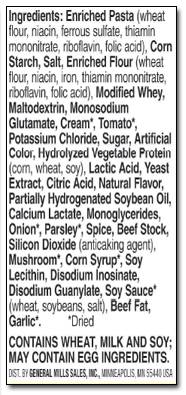
The only other thing in the box is a bag of “spice,” which when you read the label is pretty disturbing, given that it includes hydrogenated soybean oil and monosodium glutamate, two ingredients clearly linked to heart disease and obesity.

Wacky ingredients aside, that works out to a true cost per serving for the boxed meal of $3.99, given the realistic portion size of 2 1/2 cups.

There are no vegetables in the recipe, but the box does recommend adding a can of mushrooms. A four ounce can of mushrooms is about $1.10, adding 55 cents per serving for a total of $4.49 per serving.

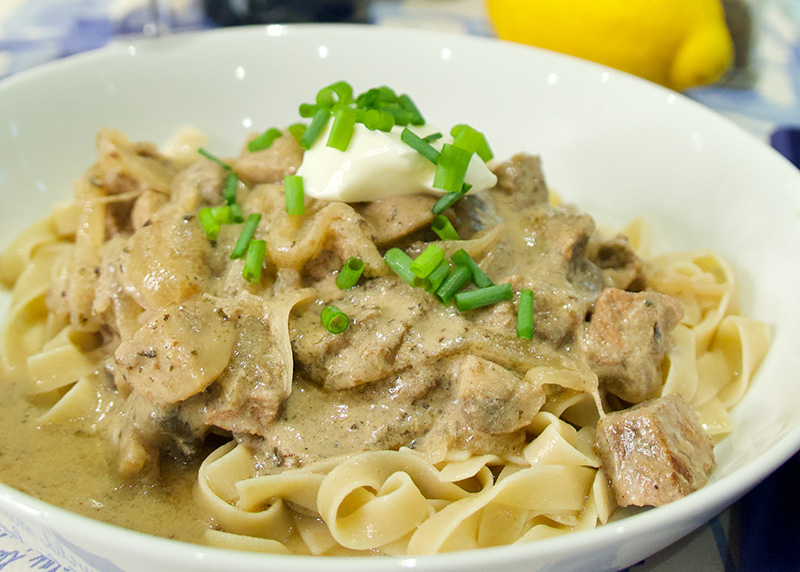
A quick and easy stroganoff uses half of the ground beef for two servings (the appropriate amount) at $2.98, a 58 cent onion, $2.00 for eight ounces of fresh mushrooms and 4 ounces of pasta (at $2.29 per pound). The remaining ingredients come to $1.20 (1/4 lemon at 20 cents, and call it another dollar for the Worcestershire sauce, flour, sour cream and spices). That’s $7.33 total or $3.67 per serving, and you get not only a lot better food for you but it is so much better tasting. Yes, it means that you have to purchase some of the items like spices and the Worcestershire sauce, but over time that leads to a much more economical kitchen.

The nutrition numbers are astounding. A single (realistic size) serving of Hamburger Helper made with the canned mushrooms has 816 calories, 33 grams of fat, 15 grams of saturated fat, 2.5 grams of (deadly) trans-fats, only 2.5 grams of fiber, and a whopping 1,631 milligrams of sodium.

Compare that to our Quick Beef Stroganoff at only 531 calories, 13 grams of fat, 9 grams of fiber and 479 milligrams of sodium.

OK, it’s cheaper and better for you and it is better for you to make your own food. What about time?

It takes about 5 minutes longer to make the real version instead of the fake one, because the whole wheat pasta needs more time to cook. In our test it took 25 minutes for the homemade beef stroganoff and 20 minutes for the fake Hamburger Helper version, including slicing the onions and mushrooms.

It is clearly less expensive to cook your own food, takes the same amount of time and is amazingly better for you. The only extra effort is in making a shopping list and cutting some mushrooms and onions. Simple.

Tacos

People just don’t think of tacos as being healthy.

They are right, of course, and this is because they equate tacos with places like Taco Bell, which is pretty bad for you. It’s a shame because the innocent taco, like so many other great recipes, has been corrupted. Beyond the needless amounts of fat and salt in many of their products, the ingredients themselves are questionable.

Not only has fast food has given tacos a bad rap as being fake food and unhealthy, fast food is not really fast these days and will cost you a lot more money.

We have already dealt with #1 and #2. We know that Taco Bell makes fake food and they have made it unhealthy. But tacos are really great for you when you make your own. Corn tortilla shells are low in fat, use whole grain corn and have very little sodium. The filling can be made using fresh, real ingredients, including lean ground beef, chicken thighs, corn and beans, fish, or even tofu, along with onions, peppers and celery. Top that with fresh tomatoes, lettuce, or salsa, and you have a tasty meal that’s fresh and real.

But what about the time? It takes about 5 minutes prep to get your taco filling cooking. Cut a few onions, some peppers, a bit of garlic, toss in some chicken thighs and spices and you can make enough taco filling for a week in all of ten minutes hands-on time. That is the same ten minutes you will stand in line at the fake and not very fast Taco Bell.

And it is cheaper to make your own. If you make a simple taco filling using lean ground beef or boneless, skinless, chicken thighs, it will cost you about $8.00 for 12 tacos. The least expensive taco at Taco Bell is about a dollar.

And what do you get for that money? Fake food.

The amount of meat that was actually in the “seasoned meat” that Taco Bell serves, referencing articles that reported between 36% meat and the company’s claim of 88% (a reader wrote to show me where Taco Bell had justified the latter and that the 36% was hype). Tacos have gotten a bad rap because Taco Bell admits that they aren’t real food. For the record, here’s the list of ingredients in their taco meat:

Beef, Water, Seasoning [Cellulose, Chili Pepper, Onion Powder, Salt, Oats (Contains Wheat), Maltodextrin (Corn, Potato, Tapioca), Soy Lecithin, Tomato Powder, Sugar, Soybean Oil, Sea Salt, Yeast Extract (Contains Gluten), Spices, Garlic Powder, Citric Acid, Caramel Color, Disodium Inosinate, Disodium Guanylate, Potassium Chloride, Cocoa Powder Processed with Alkali, Natural And Artificial Flavors, Trehalose, Modified Corn Starch, Inactivated Yeast, Lactic Acid, Torula Yeast, Natural Smoke Flavor], Salt, Sodium Phosphate, Less Than 2% Beef Broth, Potassium Phosphate, Potassium Lactate. CONTAINS: SOYBEANS, WHEAT.

In the end, take back the taco. Make it your own. Cook taco fillings and keep them on hand for tacos and taco salad and for sandwiches made from the leftovers. They are quick, easy, cheap, tasty and great for you.

Try a taco recipe:
Quick Tacos | Low Sodium Version (Pantry Meal)
Fish Tacos with Asparagus Salsa
Chayote (Mirliton) Tacos
Roasted Squash Tacos
Tomatillo Tofu Tacos
Barbecue Chicken Tacos
Salmon Salad Tacos
Soft Corn Tacos
Chopped Salad Tacos
Yellow Pepper and White Asparagus Soft Tacos
Tacos al Pastor
Chipotle Steak Tacos
Crab Salad Tacos | Low Sodium Version


Diet Strategies for Weight Loss and Better Nutrition

The first part of “Diet Strategies for Weight Loss and Better Nutrition” is a review of just that: effective strategies for weight loss. Only by looking through the body of research can one get the whole picture. We read headlines every day that say “If you just do X, you will lose weight,” but, in truth, there is no one single magic bullet strategy that will help you lose weight. Instead, it’s a combination of strategies.

Here are a few strategies that seem to recur across the research landscape:

1. Macronutrients don’t matter. It doesn’t matter whether you eat low carbohydrate, low fat, high protein, high fat, high carbohydrate, or any other mix of macronutrients. Everyone who goes on some sort of calorie-controlled diet loses weight – about 7% to 10% of their starting body weight in the first 6 months to a year.

2. Weight maintenance is key to think about on Day 1. There are lot of good strategies for weight loss, but if you are going to keep it off, you need to think about making a permanent change and not simply “going on a diet.”

3. The five most common strategies for success: Smaller portions, reducing the overall food eaten, more fruits and vegetables, fewer fatty foods and no sugar-sweetened beverages.

4. Exercise. That same study showed that the difference between a successful loser and an unsuccessful one was exercise. That is supported by dozens of other studies and over 46% of successful losers exercised 30 minutes or more each day and about another 45% said that they added some physical activity to their daily routine.

5. Eating about the same amount of calories per day works.

6. Keeping a food diary works. Keeping an online diary works even better, and in one study those using the Internet lost 50% more weight than those using a pen and paper. Interestingly, people seem to like keeping a pen and paper diary more than an online food diary.

7. Taking a picture of what you eat works as well as a food diary. It appears that keeping a photo diary works by making folks think about what they are going to consume before they eat.

8. Weighing yourself every day makes it more likely you will lose weight.

9. Portion size matters. A lot. In many studies, consuming smaller portions works and this doesn’t matter whether it is plate size, bowl size, the size of the actual serving, or the packaging.

10. Yo-yo dieting doesn’t seem to matter as much as we thought. If you lose and gain and then lose again, you are still better off than if you never lost weight in the first place.

There are easily 10 times this many strategies, but these are ones that both seem to be verified in repeat research and are also easily doable for most of us.


Safe Minimum Cooking Temperatures

Unfortunately, in this day and age you do have to be very careful when handling eggs, meats, and poultry. The estimates by the CDC of contamination with bacteria are concerning. This is more of a problem with eggs, ground meats and poultry than with steaks, chops, and seafood, but taking care to make sure that you are both handling and cooking meats properly can help you avoid getting sick.

First and foremost, keep your ingredients ice cold until just before you are ready to cook them. Letting your chicken sit warming in the sun while you are getting the grill started is not a good idea. Keep those burgers and chicken pieces on ice or in the refrigerator until the very last minute.

It is also important to be very careful when choosing your ingredients. Use the freshest beef, chicken or turkey possible. If there is any odd odor, don’t use it. Only cut meats on a plastic cutting board and wash the cutting board, your hands, and your knives in soapy water as soon as you are finished. This reduces the risk of spreading the bacteria to other foods.

Cooking thoroughly is the key to good handling of any meat. Use a small instant thermometer to check for the right temperatures. Whole chicken (or any poultry, including individual pieces) should reach 165°F. The CDC does not recommend that you let the chicken rest for any time. Free range chickens have not been proven to be safer. Many of the growers of free range chickens don’t use antibiotics and feed their chickens carefully, but there is no proof that this results in a bacteria free bird.

Burgers made from any ground meat should get to 160°F (165°F if there is poultry mixed in). Pork should be cooked to 145°F. Use the chart below along with your instant food thermometer and make sure that your foods reach a safe minimum internal temperature.

You can’t really tell whether your chicken or beef is fully cooked by looking at it. Sometimes pork will be pink in the middle but have reached the minimum temperature of 145°F. Again, it is always best to use a thermometer. After you finish cooking your meat, let it rest. During the rest time, “carryover” cooking lets the meat relax, redistributing the juices, but also the temperature remains constant or continues to rise, which helps kill bacteria. (Remember, chicken or poultry should not rest.)

Lastly, don’t put your barbecue or burgers back on the plate that you brought them out to the grill on. There may be bacteria on that dish and you risk cross-contaminating your freshly cooked burger with the very germs you were trying to kill by cooking it.

This realities of cooking do mean that you have to be careful. We cook food after all to both make it taste better and to make it safe for eating. Take a few careful steps and your summertime grilling will be a success.

Ingredient Type Temperature (°F) Rest Time
Ground Meat & Meat Mixtures
Beef, Pork, Veal, Lamb 160 None
Turkey, Chicken 165 None
Fresh Beef, Veal, Lamb
Steaks, roasts, chops 145 3 minutes
Poultry
Chicken & Turkey, whole 165 None
Poultry breasts, roasts 165 None
Poultry thighs, legs, wings 165 None
Duck & Goose 165 None
Stuffing (cooked alone or in bird) 165 None
Pork and Ham
Fresh pork 145 3 minutes
Fresh ham (raw) 145 3 minutes
Precooked ham (to reheat) 140 None
Eggs & Egg Dishes
Eggs Cook until yolk and white are firm None
Egg dishes 160 None
Leftovers & Casseroles
Leftovers 165 None
Casseroles 165 None
Seafood
Fin Fish 145 or cook until flesh is opaque and separates easily with a fork. None
Shrimp, lobster, and crabs Cook until flesh is pearly and opaque. None
Clams, oysters, and mussels Cook until shells open during cooking. None
Scallops Cook until flesh is milky white or opaque and firm. None

The Mediterranean Diet and Weight Loss

Weight loss is important, but far too much focus is put on dieting only for weight loss.

Forget everything you have heard about weight loss other than the following: if you consume fewer calories and burn more calories, you will lose weight. For almost everyone, it really is that simple.

How about the Mediterranean diet? Can it help with weight loss over and above just lowering calories?

There is great evidence that the Mediterranean diet can help you lose weight. This is because recipes made using Mediterranean diet principles are less calorie dense, have more flavor and are more filling for the same number of calories! Many of these studies compare Mediterranean diet with other plans, including low-carbohydrate and low-fat diets. In some cases researchers are looking at things other than weight loss — most often heart disease, cardiovascular disease markers, metabolic syndrome or diabetes.

In one study that specifically evaluated weight loss, researchers compared Mediterranean style diet with low-carbohydrate and low-fat diets. Those participants in each of the groups following the Med-diet and low-carb diet plans lost weight at about the same rate (the low-fat plan showed much less weight loss).1 If the weight loss is similar, then why should you care? F Mediterranean style diet offers more variety and flexibility in what you actually eat. If weight loss is the key for you, that variety can help you sustain your progress.

A meta-analysis of seven studies came to a similar conclusion with weight loss being slightly greater in the Mediterranean diet than in those following low-carbohydrate diets.2 Interestingly, the improvement in cholesterol scores is often slightly better with the Mediterranean diet, while those following the low-carb diet have slightly improved blood sugars. Sometimes the weight loss is marginal, but in almost every study that looked at weight participants lose weight even if it is only a few pounds.3

Those who write us to tell us about their weight loss also tell us about improvements in their blood pressure, blood sugar and cholesterol profiles. Our experience with these anecdotes is not a scientific study by any stretch, but those stories are well supported by the research.


1. Shai, I. et al. Weight loss with a low-carbohydrate, Mediterranean, or low-fat diet. N Engl J Med 359, 229-241 (2008).

2. Nordmann, A. J. et al. Meta-Analysis Comparing Mediterranean to Low-Fat Diets for Modification of Cardiovascular Risk Factors. AJM 124, 841-851.e2 (2011).

3. Estruch, R. et al. Effects of a Mediterranean-style diet on cardiovascular risk factors: a randomized trial. Ann Intern Med 145, 1-11 (2006).

The DASH Diet and the Mediterranean Diet

The DASH Diet (Dietary Approaches to Stop Hypertension) is so successful because its foundations are drawn from research on the Mediterranean diet. Many of the researchers who took part in the initial DASH study were the same who detailed the benefits of the Mediterranean diet. If you look at them side by side it’s easy to see how similar they are:

DASH Diet Mediterranean Diet
Grains,
whole grain products Grains,
whole grain products
Vegetables Vegetables
Fruit Fruit and Nuts
Low-fat or fat-free dairy Low-fat or fat-free dairy
Meats, poultry and fish Less meat and lean meat
More fish
Nuts, seeds, and dry beans Legumes (note nuts above with fruit)
Fats and oils More unsaturated and less saturated fat
Sweets
Alcohol in moderation

The results of the initial DASH study found that those following the diet had both lower systolic and diastolic blood pressures in those without high blood pressure. The effect in those with hypertension was even greater, with blood pressure reductions of around 11 points.1 This was profound information at the time, but as researchers are prone to do, they thought that they might be able to do better.

At the time there were questions about whether lowering the sodium content in the DASH diet might be even more effective. The three diets in the DASH diet study contained approximately 3,000 mg sodium per day. A follow up trial, the DASH – Sodium study was devised with two diets similar to the control diet and the DASH diet in the previous study.

Each diet plan was devised with three levels of sodium – the original 3,000 mg per day as well as 2,400 mg and 1,500 mg levels. The study was designed as a crossover trial where each of the 6 groups followed the diet for a month and changed diets at the beginning of the following month. This intervention strategy insures that the results of each plan are valid in all the participants.

Control Diet DASH – Sodium Diet
3,000 mg 3,000 mg
2,400 mg 2,400 mg
1,500 mg 1,500 mg

The original DASH diet with 3,000 mg sodium lowered blood pressure in all of the participants to the levels seen in previous studies. Lowering sodium intake to 2,400 mg/day effectively reduced blood pressure for all participants. (2)

Sodium intakes at 1,500 mg per day, however, lowered blood pressure by twice as much with a reduction of 8.9 points (systolic) and 4.5 points (diastolic). Once again, the effect was greater in those who were already hypertensive with a drop in blood pressure of 11.5 points (systolic) and 5.7 points (diastolic).

The challenge for the DASH diets was that both of the studies were designed by giving the participants pre-prepared food. That level of control makes it easier for researchers to prove that a diet works and they wondered whether simply teaching people how to eat would offer the same benefit.

Researchers in the PRIMIER trial divided study participants into three groups:

Advice-only (control): Participant received a single education session with printed handouts.

Established recommendations: This group received behavioral counseling of 18 sessions with trained interventionists (typically registered dietitians) over 6 months using recommendations for non-pharmacologic management of hypertension including:

  • reduced sodium intake
  • increased physical activity
  • limited alcohol intake,
  • weight loss

Established-plus-DASH: The final group also had 18 sessions based on the established recommendations plus the DASH diet.

The results were similar to the controlled studies with those following the DASH diet showing a 25% reduction in the number having high blood pressure. Even better, 35% of those who with hypertension at the beginning of the study were more likely to have optimal control of their pressures.

Outcome Baseline Advice Only Established Recommendations Established
+ DASH Diet
% with Hypertension 37 26 17 12
% with Optimal control 0 19 30 35

These studies were amongst the first large scale controlled trials to prove the impact of diet on high blood pressure. The best part is that the research has been repeated with Mediterranean diet giving you great options in getting healthier and staying healthy.

1. Appel LJ, Moore TJ, Obarzanek E, et al. A clinical trial of the effects of dietary patterns on blood pressure. DASH Collaborative Research Group. N Engl J Med 1997; 336:1117-1124.

2. Sacks FM, Svetkey LP, Vollmer WM, et al. Effects on blood pressure of reduced dietary sodium and the Dietary Approaches to Stop Hypertension (DASH) diet. DASH-Sodium Collaborative Research Group. N Engl J Med 2001; 344:3-10.


What is the DASH Diet?

For the most part, the DASH Diet is an American application of the Mediterranean diet. The research in the 1970s and 1980s about Mediterranean diet laid the foundation for great quality nutrition research in the 1990s. The result was a large scale, multi-center trial of 459 adults age 22 years or older.1

The goal of the research was to look at how diet might influence blood pressure. Participants had systolic blood pressures less than 160 and diastolic pressure between 80 to 95. A total of 29% carried a diagnosis of hypertension.

None of those in the study was taking high blood pressure medications,

50% female and 60% African Americans (who have much higher rates of high blood pressure). 27% were smokers. They were divided into three groups:

  1. The control group was given a diet similar to what many Americans consumed at the time, although it was lower in potassium, magnesium, and calcium.
  2. The second group was similar to the control but were given more fruits and vegetables
  3. The third group was the DASH diet. This table outlines the diet.

The results were pretty fantastic:

  • DASH diet lowered systolic blood pressure by an average of 6 mm Hg
  • DASH diet lowered diastolic pressure by about 3 mm Hg.
  • The Fruit and vegetable diet also lowered blood pressure about 3 mm Hg systolic and 2 mm Hg diastolic.
  • Those with stage 1 hypertension (blood pressure 140/90-159/99 mm Hg):
    • DASH diet reduced systolic blood pressure by an average of 11 mm Hg
    • DASH diet reduced diastolic blood pressure by 6 mm Hg
  • The lower blood pressures were seen within 2 weeks of starting the diets.

We have two considerations when talking about diet and nutrition. One is weight loss and that is, for the most part, about the number of calories consumed vs. those burned (calories in < calories out = weight loss). The other half of the dialogue is about the quality of those calories. Note the similarity to Mediterranean diet in the DASH Diet study. More whole grains, vegetables, fruits, nuts, seeds, dried beans, low-fat dairy, lean meats (and less meat) and quality fats.

The interesting thing was that people didn’t lose much weight (that wasn’t the goal of the study), but as you can see they had a dramatic improvement in their blood pressures. We see these same sorts of results when looking at Mediterranean style diet.


1. Appel LJ, Moore TJ, Obarzanek E, et al. A clinical trial of the effects of dietary patterns on blood pressure. DASH Collaborative Research Group. N Engl J Med 1997; 336:1117-1124.


Mediterranean Diet, Weight Control, and Weight Loss

Mediterranean Diet. There’s a lot to offer but best of all is great food.

When most people think about a diet, they think about weight loss and there are tons of diets out there. Most of them will help you lose weight and the research on losing weight over the last decade has become pretty clear – weight loss is about calories. It is really simple: consume fewer calories and lose weight.

There have been dozens of studies detailing the effect of a Mediterranean style diet on weight. In one, a group of researchers used information gathered in Spain about dietary patterns and detailed the effect of Mediterranean diet on weight gain. (J. Nutr. 136: 2934-2938, 2006) This was a large study with almost 28,000 participants (about 60% women). At the beginning of the study nutritionists collected information on dietary intake during the previous year. An eight point Mediterranean Diet score was used based on participants’ intake of fish, vegetables, fruits, legumes cereals, the ratio of monounsaturated to saturated fat, meats and alcohol. As with other Mediterranean Diet scores, a score of 1 indicates low adherence while a score of 8 was a perfect score.

Over the three year period 8% of women and 7% of men who were overweight at the beginning of the study were found to be obese. Those who were of normal weight became obese at a high rate as well (14% of women and 23% of men).

When the researchers looked at those with higher Mediterranean Diet scores, however, they found a dramatic reduction in the rates of obesity. This was similar in women and men with about a 30% lower chance of becoming obese for those with having scores in the 6 – 8 range.

If following a Mediterranean style diet can help keep you from gaining weight, can it also help you lose weight? The answer is yes. In a very good quality study researchers compared low-fat, low-carbohydrate and Mediterranean style diet. Those in the low-carb and Mediterranean arms of the study lost weight at about the same rate: about 4.5 kilos. (N Engl J Med 2008;359:229-41)

Reviews of other weight loss studies come to a similar conclusion – eat better, lose weight. A Mediterranean style diet, however, offers you so much more in the way of variety.

It also offers marked improvement over other diets in important health parameters, including abdominal adiposity (belly fat), blood pressure, cholesterol and diabetes. A very large analysis of studies that included more than 500,000 participants showed that following a Mediterranean style diet leads a lower risk of Metabolic Syndrome, lower waist circumference, improved cholesterol profiles, lower blood pressure and lower blood sugars. (J Am Coll Cardiol 2011;57:1299-313)

Will you lose more weight than on other diets? Possibly not. The research on weight loss shows us that people lose weight when they diet, and it doesn’t matter all that much what type of diet it is. This is also true for a Mediterranean style diet.

You do, however, get to eat real food and not follow some complicated, restrictive fad diet. Weight loss, real food, loss of belly fat, improved cholesterol and blood pressure – you can have great food and feel better.


What are Antioxidants?

Antioxidants. You hear the term all the time but what does it mean? The word sounds so important, so sciency and there is, of course, science involved.

When the cells in your body use oxygen, the interaction with other molecules results in their oxidation. The by-product of that oxidation is free radicals — molecules or atoms that lose one or more electrons. Free radicals are unstable, and in a sense, are looking to replace or give up their unbalanced number of electrons. In scavenging for electrons, they cause damage to cells in the body. That is known as “oxidative stress” and this cellular damage contributes to disease.

This should not sound like the oxidation process is bad. On the contrary, these chemical reactions are necessary for life and are not only critical for ongoing function but also repair of your cells.

Antioxidants do just what they sound like: they oxidize free radicals and stop the process of cellular damage, but many of the antioxidants we need are not produced by our bodies. The challenge for us is making sure we consume enough of these to balance the normal oxidative process and the production of damaging free radicals. Vitamin C (ascorbic acid) is not made by the body, for example, and is thus considered an essential Vitamin. Its antioxidant properties are critical for normal function of the body, but we have to consume it in some way.

At this point it sounds pretty simple, doesn’t it? Just take a pill full of antioxidants.

Unfortunately, the research on this has been very disappointing. A large review of studies on antioxidants concluded that there is an increase in the risk of mortality with consumption of antioxidants in pill form.1 At one time there was a hope for supplement use leading to the reduction in diseases. Unfortunately, there have been a string of failures. For example, in a large study evaluating whether Vitamin E and selenium might prevent prostate cancer it was found to actually increase the risk.2 Even something as simple and seemingly harmless as a multivitamin has been linked to increased risk of breast cancer in women.3

Time and again pills have been shown to not work and these are only three of dozens of studies that show getting your antioxidants in an unnatural way is not only not beneficial but may actually be harmful.

The good news is that there is a tremendous amount of research to show that consumption of essential vitamins and antioxidants in food are quite beneficial. Intake of foods high in flavonoids has been clearly linked to reduced risk of chronic diseases.4 Research on the intake of fruits and vegetables5, hundreds of studies on coffee and tea and even chocolate have been linked to reduced risk of illness from heart disease, diabetes, cancer and even Alzheimer’s. There are, quite simply, too many studies to list that support getting your antioxidants in the form of food and almost none to show that antioxidant supplements are beneficial.

So stop spending your money on supplements and vitamins in pill form. Get them in real food.

Here’s a list of antioxidants and some great food choices that contain them. This is by no means a complete list, and the key is to eat a wide variety of fresh food, especially fresh fruits, veggies, fish, nuts and seeds.

Vitamin A & Carotenoids

Turkey
Chicken
Pumpkin
Sweet potatoes
Spinach
Apricots
Broccoli
Cantaloupe
Carrots
Collard greens
Kale
Squash
Tomatoes

Vitamin C

Grapefruit
Lemons
Limes
Oranges
Strawberries
Tomatoes
Red peppers
Green peppers
Broccoli
Kale
Spinach

Vitamin E

Nuts & seeds
Green leafy vegetables
Vegetable oil
Tomatoes
Pumpkin

Selenium

Fish & shellfish
Red meat
Eggs
Chicken
Oysters
Tuna
Brown rice
Garlic

Flavonoids & Polyphenols

Soy beans and soy products
Coffee
Tea
Chocolate
Olive oil
Legumes
Red wine
Red or purple grapes

Lycopene

Watermelon
Pink grapefruit
Kidney beans
Asparagus
Tomatoes

Lutein

Spinach
Peas
Kale
Broccoli
Collard greens
Brussels sprouts,
Winter squash
Pumpkin
Corn

Lignans

Flax seed
Barley
Rye
Oatmeal

Coenzime Q10

Nuts
Seeds
Broccoli
Cauliflower
Grapes
Avocados
Strawberries
Olive oil
Fish

Glutathione

Avocado
Garlic
Tomatoes
Okra
Potatoes
Cabbage


1. Bjelakovic G, Nikolova D, Gluud LL, Simonetti RG, Gluud C. Antioxidant supplements for prevention of mortality in healthy participants and patients with various diseases. Cochrane Database of Systematic Reviews 2012, Issue 3. Art. No.: CD007176. DOI: 10.1002/14651858.CD007176.pub2.
2. JAMA. 2009;301(1):52-62
3. Am J Clin Nutr 2010;91:1268-72.
4. Am J Clin Nutr 2002;76:560-8.
5. J. Nutr. 138: 775-781, 2008

Soup to the Rescue

Fall is the time to think about soup. Mind you, soup year ’round is great but when it starts turning chilly It is great to have a big bowl of warm comforting soup.

The great thing about soups is that they are generally easy to make and a great place to start if you are new to cooking for yourself. Some onions, vegetables, stock, seasonings, and maybe a bit of meat, simmered for about 45 minutes and you have soup.

It’s surprising that there are not more quality research studies about the health benefits of soup. We think of chicken soup as being good for what ails you, so it seems that we might have better research about this.

In a very small study looking at the effect of chicken soup on white blood cells, one group showed a slowing of movement of the cells in test tubes containing broth. In the research, the more soup applied to the white blood cells, the more the movement of the cells slowed. It is certainly a leap of faith to assume that this works in real life, however 1. In a similar study, researchers used Brand’s Essence of Chicken and a prepared chicken meat extract and were able to show that these extracts reduced hypertension and heart enlargement in experimental rats. Tests with a prepared pork extract did not show any improvement, however. Again, a leap of faith – but at least we have moved from the test tube to an animal model. 2

These are the sorts of studies we have had, with few looking at longer term outcomes. That is getting a little better in the last few years.

There has been epidemiologic data that shows eating soup is associated with a lower risk of obesity. A group of researchers looked at the National Health and Nutrition Examination Survey (NHANES) data and found soup consumption was associated with a reduced energy density of foods consumed, reduced intake of total fat, and an increased intake of protein, carbohydrate, and dietary fiber. Those eating more soup did have a higher intake of sodium. The researchers felt that the relationship between eating soup and lower body weight might be related to the overall improved diet quality. 3

Researchers at the University of Pennsylvania asked if having a bowl of soup before a meal’s entree would help reduce the total calories eaten at that meal. They found that subjects who received soup as a first course ate 20% less of the main course than if they had no soup at all 4. Dr. Rolls and her group at Penn also showed that having two servings of an energy dense soup when on a diet led to 50% greater weight loss than the same number of calories consumed as snack food 4.

It is possible that one mechanism for this effect is that soup can delay gastric emptying. 5

While the research is not great, it does point to soup having some health benefit.

There are great reasons for having your favorite soup based on good old fashioned common sense. The first is that most soups are not calorie dense and are filling and satisfying.

You can make a big pot of chicken and vegetable soup, for instance, and a large bowl will be satisfying, full of fiber, tasty, and great for you. Make a big batch of soup on the weekend so that you have leftovers. During the week the soup will be ready when you don’t have the time to make dinner. Lastly, this is a great way to get kids to eat vegetables where they might not eat them as a side dish.

These maxims apply to stews as well, and the key is choosing a recipe with lean meat, lots of veggies, and whole grains like brown rice, whole wheat pasta, or beans. Here are some examples:

Lentil Chili
Minestrone
Basque Chicken Stew
Black Eyed Pea and Pork Stew
Spanish Beef Stew with Olives
Turkey White Bean Soup
White Chili
Pasta Fagioli with Chicken
See all of our soup recipes& »

In the end, soup might be healthier for you, but whether it is or not, soup is delicious, simple to make, and cheap.

References

1. Chicken Soup Inhibits Neutrophil Chemotaxis In Vitro Rennard, Barbara O. et al. CHEST, Volume 118 , Issue 4 , 1150 – 1157

2. Slim, M. (2001). Cardiovascular actions of chicken-meat extract in normo- and hypertensive rats. British Journal of Nutrition, 86(1), 97-103. doi:10.1079/BJN2001367

3. Zhu, Y., & Hollis, J. (2014). Soup consumption is associated with a lower dietary energy density and a better diet quality in US adults. British Journal of Nutrition, 111(8), 1474-1480. doi:10.1017/S0007114513003954

4. Flood JE, Rolls BJ. Soup preloads in a variety of forms reduce meal energy intake. Appetite. 2007;49(3):626-634. doi:10.1016/j.appet.2007.04.002.

5. Clegg ME, Ranawana V, Shafat A, Henry CJ. Soups increase satiety through delayed gastric emptying yet increased glycaemic response. Eur J Clin Nutr. 2012;67(1):8-11. doi:10.1038/ejcn.2012.152

Originally posted: November 28, 2011. Updated: October 23, 2017