

Glycemic Index

The glycemic index (GI) of a particular food, whether it is a raw ingredient, such as an apple, or prepared food, such as apple pie, is defined as the rate at which the food raises serum blood sugar levels in the 2 hour period after consumption, based on a scale of 1-100.

The calculation is based on the area under the two-hour blood glucose response curve after a participant has consumed a portion of the food containing 50 grams of carbohydrate. Testing is performed after a 12-hour fast. The area under the curve (AUC) of the food being tested is divided by the AUC of 50 grams of glucose multiplied by 100. A standardized glycemic index value is the average of data collected in 10 subjects. By comparing test foods against the same amount of carbohydrates in glucose, the result gives a relative ranking for each tested food.1

Glycemic Index Ranking

Low 0 – 55
Moderate 56 – 69
High > 70

Advocates of glycemic index argue that patients with diabetes or who are trying to lose weight will be more successful by utilizing this scale for food and meal choices, as lower glycemic meals result in greater weight loss and satiety levels. Others question its validity because it does not completely account for the nutritional content of foods and may promote obesity. Some scales place bananas and Snickers bars around the same level, while watermelon has a higher score than a Milky Way bar. Another issue is that different sources give foods varying ratings on the scale; white rice, for example, can range from a score of 38 to 94 depending on the scale, and the ripening or cooking process may change a particular food’s glycemic index by as much as 30%.

Factors Influencing Glycemic Index

  • Type of carbohydrate (Starch vs. Glucose)
  • Total sugar content of the food
  • Fat content
  • Protein content
  • Acid content
  • Fiber content and viscosity of the fiber
  • Amount of processing

A major limitation is that glycemic index does not account for insulin release due to the rise in blood sugar. Foods that may have the same glycemic index don’t necessarily result in the same level of insulin response. The rise in blood sugar after consumption of a particular ingredient is dependent upon a number of factors — the type of carbohydrate (starch vs glucose, for example), protein content of the food, the amount of soluble vs. insoluble fiber and even adding vinegar can impact the GI.2

Glycemic Load

The glycemic load was developed to counter the issues with the glycemic index; multiply the GI of a food times its grams of carbohydrate (10 or under is considered a good choice). While this is a better system, it still does not take into account that individuals have different responses to high or low glycemic foods and that other factors, including various vitamins and minerals, can affect glucose metabolism.

The Effect of Free Feeding on Glycemic Index of Meals

A small study performed in Finland compared the theory of the Glycemic Index with a realistic diet. The researchers recruited 11 healthy adult men and women of normal weight who also had a normal glucose tolerance test. Once a week, for six weeks, and in a random order, participants were given six different meals that included mashed potatoes. After they ate the meal, their blood glucose was measured every fifteen minutes for the first hour, then at 90 and 120 minutes after the meal.3

The six meals studied were:

  1. Mashed potato with margarine, served with water and ~1.5 ounces cucumber
  2. Mashed potato with ~1 ounce rapeseed (canola) oil, served with water and ~1.5 ounces cucumber
  3. Mashed potato with ~4 ounces chicken breast, served with water and ~1.5 ounces cucumber
  4. Mashed potato with ~4 ounces salad comprised of cucumber, tomato and lettuce
  5. Mashed potato with ~1 ounce rapeseed oil, ~4 ounces chicken breast and ~4 ounces salad (as in #4)
  6. A slightly smaller portion of mashed potato with ~1 ounce rapeseed oil, ~4 ounces chicken breast, ~4 ounces salad, and a ~4 ounce slice of rye bread

All the meals contained about the same number of carbohydrates (the meals with salad had 4 more carbohydrates than the others).  As a reference, each person consumed a standard glucose solution on two occasions during these six weeks so the researchers could determine the GI for each meal in comparison to the individual’s response to the glucose solution. Standard reference tables give a range of GI values for mashed potatoes, between 71 and 102 (and even up to 106). The meal containing mashed potato with the rapeseed oil (whose GI is about 0) yielded a lower GI value by 37 points. The meal that most resembled an actual meal (#5) also had a lower GI than the mashed potato alone.

Glycemic Index, Glycemic Load and Satiety

One small study looked at subjects’ feelings of satiety as well as their feelings of hunger after standardized high-GI and low-GI meals.4 The fourteen subjects for this study were overweight and obese women between the ages of 25 and 60 who did not smoke and were otherwise healthy.

To imitate a high-GI meal, participants were given a large glucose beverage to drink all at once after a standardized breakfast and lunch. To imitate the low-GI meal, each woman was given the same amount of glucose beverage after the standardized breakfast and lunch, but they drank equal, small portions of it every 20 minutes. Note that each woman received the same amount of the glucose beverage – the only difference was how long it took to drink it. The researchers found that drinking the single, large glucose beverage – the high-GI meal – led to greater feelings of hunger than the smaller, more frequent glucose beverages (the low-GI meal).

The challenge is that subjects ate the same number of calories over the course of their standardized meals plus their glucose beverages – the only difference is that those calories were consumed all at once or spaced out over time. This might support the idea that slower consumption of meals and not the glycemic index is the controlling factor in satiety.

Glycemic Index in Diabetics

In a long-term study comparing a high-GI diet with a low-GI diet in diabetics there were mixed results.  Their study endpoint was to document improvement in Hemoglobin A1C and as a secondary goal, they also looked at whether that diet helped improve participants’ lipid levels.5 Participants were assigned to one of two diets:

Low GI Diet: emphasized low GI breads such as pumpernickel, quinoa and flaxseed; large flake oatmeal or bulgur/flax hot cereals; white pastas and rice; and legumes such as beans, peas and lentils. Fruits such as apples, pears, oranges, cherries and berries.
High Cereal Fiber Diet: emphasized brown (whole grain) breads, crackers, breakfast cereals, and rice; potatoes with skin; and legumes. Fruits such as bananas, mangos, grapes, watermelon and cantaloupe.

The goal of the two diets was to maintain a similar overall amount of fiber intake while reducing the glycemic index in the Low GI Diet by 10 to 20%. After six months both groups reduced their Hemoglobin A1C: 0.5% for the Low GI Diet versus 0.18% for the High Cereal Fiber Diet. The Low GI Diet participants also improved their cholesterol scores more than those on the High Cereal Fiber Diet. While the results are statistically significant, there was minimal improvement in both biomarkers.

In an observational study looking at dietary GI and GL and the risk of type 2 diabetes, over 25,000 males completed a demographic and anthropometric questionnaire.6 They also responded to a detailed diet history questionnaire asking how often and how much they ate of 276 foods over the previous year. Using those questionnaires, the researchers were able to calculate each participant’s nutrient intakes as well as GI and GL. They also calculated the intake of carbohydrates as a percentage of their overall caloric intake, then that percentage was broken out for low-, medium- and high-GI foods. The researchers grouped the men into five levels of increasing dietary GI and five levels of increasing dietary GL.

At the end of the study the researchers compared the diets of those 1098 men who had developed type 2 diabetes with the diets of those who did not. When the researchers adjusted for age and intervention group, high GI and GL corresponded with lower risk of type 2 diabetes. However, when they also adjusted for other variables, that relationship disappeared. Because they had calculated the percentages of caloric intake for low-, medium- and high-GI carbohydrates, they were able to analyze what difference substituting medium-GI carbohydrates for high-GI carbohydrates might make – which showed a reduction in risk of type 2 diabetes. On the other hand, substituting low-GI carbohydrates for high-GI carbohydrates made no difference, while substituting low-GI carbohydrates for medium-GI carbohydrates actually increased the risk of type 2 diabetes.

While this study showed no relationship between glycemic index and diabetes, and is also in line with other studies that include only men, studies that include only women have shown some association between high GI and GL and diabetes.

Glycemic Index and Weight Loss

A study comparing four different diets and weight loss include two diets higher in total carbohydrate and two higher in total protein. Each diet was further divided into plans that contained a greater amount of either low or high GI foods.7

Those eating the different GI diets had surprising effects with respect to weight loss. 56% of those eating a high carbohydrate / low-GI diet lost more than 5% of their body weight. At the same time, 66% of the high protein / high-GI dieters also lost more than 5% of weight. Even though the high protein / high-GI group lost weight at a higher rate, the high carb / low-GI group had a better outcome with respect to their risk factors for heart disease – with a greater loss of fat mass and reduction of their LDL cholesterol in spite of achieving lower weight loss than any of the other diets (although this was not statistically significant).

The other diets (high carb / high-GI and high protein / low-GI) had similar numbers of participants losing weight.

There are a few factors in the results that might have an impact on the validity of the research. The group of high carbohydrate / low-GI dieters may have had better reduction in their cardiac risk factors, but they also ate a lot more fiber. Those dieters also ate less fat than prescribed. Another drawback is that this is a small study lasting only 12 weeks. Dietary studies such as this are very difficult to do and the researchers and participants are to be commended. Unfortunately, the results often end up needing more questions to be answered.

The most important finding was that all four diets resulted in weight loss. All the groups lost about the same percentage of pounds: right around 5% of total body weight.

On the other hand, a high-GL diet may help maintain weight loss.

A study looked at 42 clinically overweight but otherwise healthy men and women between the ages of 20 and 42.8 Participants received twice-weekly counseling sessions intended to lead to greater feelings of self-efficacy around weight loss. At the same time, they were randomly assigned to a high-Glycemic-Load diet or a low-Glycemic-Load diet. For the first six months of the study, all food was provided to the participants, then for the second six months of the study, the participants chose, shopped for, and cooked their own meals according to training they’d been given about their high-GL or low-GL diet and the number of calories they were assigned to eat.

Both groups lost about the same amount of weight, and the GL level of their diets did not appear to affect the participants’ levels of self-efficacy. The researchers note that those on a low-GL diet regained some weight during the second six months of the study, while those on a high-GL diet maintained their initial weight loss. Despite their improved feelings of self-efficacy, those on a high-GL diet maintained their weight loss while their colleagues in the low-GL group regained weight. That suggests that a high-GL diet is more sustainable: they found it easier to maintain a high-Glycemic-Load diet on their own.

Summary

Most research on glycemic index has flaws. Many have a small sample size and are either isolated to males or females. There has been variability in reproducing data between studies. In a very large trial of 800 subjects, researchers found a wide variability in glucose response to identical meals between subjects.9 Glycemic index remains a useful guide, but is not necessarily a good clinical tool.

1. http://www.glycemicindex.com

2. Clinical Diabetes 2011;29(4):155-159.

3. British Journal of Nutrition 2011;106:248-253

4. Appetite 2008;50:215-222

5. JAMA 2008;300(23):2742-2753

6. British Journal of Nutrition 2011;105:1258-1264

7. Archives of Internal Medicine 2006:166(14);1466-1475

8. Karl JP, Cheatham RA, Das SK, et al. Effect of glycemic load on eating behavior self-efficacy during weight loss. Appetite. 2014;80(C):204-211.

9. Zeevi D, Korem T, Zmora N, et al. Personalized Nutrition by Prediction of Glycemic Responses. Cell. 2015;163(5):1079-1094. doi:10.1016/j.cell.2015.11.001.
Shellfish Allergy

While peanut and egg allergy most often are found in children, shellfish allergy occurs mostly in adult patients. Although 1.9% of adults believe that they are allergic to shellfish, only about 1.3% of adults in the US actually have a physician-diagnosed shellfish allergy. The percentage of people with a shellfish allergy is fairly equal among age and racial or ethnic groups, but African-Americans are more likely to self-report an allergy. People who experience a severe reaction to shellfish may also experience reactions to fin fish as well, but just why that might be is not yet well understood.

The major allergen in shellfish is the actin-binding protein tropomyosin. (Interestingly, parasites often associated with shellfish have also been found to be allergenic.) Crustaceans (shellfish) include crab, shrimp, krill, molluscs, and copepods. molluscs include clams, octopi, squid, and scallops. Copepods are small (1-2mm) crustaceans found in fresh water supplies all over the world and are used in the tap water supply to control mosquitoes and other insects. While the larger copepods are normally filtered out, the smaller ones can make their way into the water mains and are routinely found in the tap water of cities that rely on reservoir water, such as New York and San Francisco.1

Those with shellfish allergies should be aware that beer and wine may be processed with clarification agents derived from fish bladder. Be cautious of them unless you know that either they have not been processed this way or that you are not allergic to fin fish as well as shellfish.

At one time there was a belief that the allergy to shellfish was caused by an allergy to iodine in the shellfish. The good news is that this myth began as a misinterpretation of studies done in the 1970s. We’re not sure why shellfish became the focus of these studies, but in truth the results simply showed that 15% patients with any food allergies were also allergic to iodine based contrast.2

1. Muthiah, R., et al. Copepods: Worldwide Sources of Allergens – Partial Sequences of Three Unique Proteins. Journal of Allergy & Clinical Immunology 2005; 115(2): PS91.

2. Schabelman, E., and Witting, M. The relationship of radiocontrast, iodine, and seafood allergies: a medical myth exposed. J Emerg Med. 2010; 39(5):701-7.

Egg Allergy

Egg allergy is a very common allergy in children, affecting 1.6%-2.5%. Almost all children with egg allergies develop a tolerance to eggs by age 5, however. Although the specific proteins causing the allergic reaction are generally found in the egg whites, allergic patients must avoid egg yolks as well because it is impossible to separate the two.

The most common egg allergen is known as ovomucoid. It generally remains allergy-causing when cooked, although many of the other, minor allergens in eggs can be tolerated by affected patients after cooking. Unfortunately, there are many hidden sources of eggs, and those who are allergic should be careful to read nutrition labels. Some of the more common hidden sources of egg include marshmallows, mayonnaise, meringue, baked goods, breaded foods, marzipan, frostings, processed meat, meatloaf, meatballs, puddings and custards, salad dressing, pasta, pretzels, and fresh baked bread from a bakery.1

Data does suggest that kids with certain allergies can become less sensitive as they age. How and when one might reintroduce egg into the diet depends on how severe of the allergy. Children with mild allergies whose symptoms are limited to mild skin rashes or hives may be tested by eating fully cooked egg around ages 2-3. The best, safest process for reintroducing egg to those with severe egg allergy has not yet been well established and should not be tried at home – it’s best to discuss this with your pediatrician or allergist. Children with any severe or systemic reaction or history of asthma should be prescribed an epinephrine auto-injector (EpiPen). Again, ask your physician if you should have one for your child.

Always tell your doctor if you believe you or your child is allergic to eggs, as egg proteins are found in several vaccines, including influenza, yellow fever, and MMR. The amounts of allergens are extremely low, however: for example, influenza vaccines contain just 0.02 to 1.0 micrograms and the variation depends on the brand and batch. MMR, on the other hand, contains 40 picograms (1 milligram equals 1,000,000,000 picograms). Even though the amounts of allergens are so small, the CDC recommends modifications to the vaccine schedule for patients with a history of egg allergy, and you should discuss this with your pediatrician.

That said, those who are able to eat lightly cooked eggs or baked goods without reaction may receive their vaccinations according to the standard schedule. If your child experiences only hives when they eat eggs, they may also receive the vaccine on the regular schedule, but should remain under observation for thirty minutes after receiving the vaccine. Children with more severe egg allergy symptoms should be referred to a specialist for further evaluation prior to vaccination. Vaccination is vitally important to your child’s health: discuss any concerns you might have with your physician.

1. Mayo Clinic Staff. Egg allergy: Prevention. http://www.mayoclinic.org/diseases-conditions/egg-allergy/basics/prevention/con-20032721

Legume and Tree Nut Allergies

Allergies to legumes, which include peanuts, are very common, although just what percentage of the population has these allergies is not yet clear. Peanut allergies are well studied, and allergies to other legumes are believed to be far less prevalent than peanut allergies. Common legume allergies include those to peanuts, soy, lupins, and lentils. Just 0.3% to 0.4% of children are allergic to soy, but while soy oil and soy lecithin are nearly ubiquitous in processed food, they can be safely ingested by allergic patients.2

Peanut allergy is estimated to occur in 0.5% of children, although over 1% believe themselves to be allergic. There has been a dramatic rise in the incidence of peanut allergy in children, with one British study finding its prevalence tripling in less than a decade.

This allergy is particularly a problem as its reactions are relatively severe, and it is the most common cause of food allergy-related anaphylaxis deaths. It requires only very small amounts to trigger a response, which is what has led to the idea of “airborne” peanut allergy. Sensitivity to peanut oil, however, varies in peanut allergy patients and is highly dependent on brand and manufacturing methods.

Peanut allergy was previously believed to last for life, but there are now studies showing that up to 10% of people will become less allergic over time. A recent study published in the New England Journal of Medicine showed a significant decrease in peanut allergies in children when they were exposed to peanut containing foods early in their lives. This study compared two groups of patients: one group received a regular amount of peanut protein of at least 6g per week every week until they reached 60 months of age. The second group avoided exposure to peanut protein over that same period. Those children who received the steady dose of protein were significantly less likely to have an allergy to peanut protein.1

While some people who are allergic to peanuts will show increased levels of IgE (Immunoglobulin E, which is responsible for the allergic reaction) when exposed to soy, that does not mean that people will have a reaction. They are more likely to have cross-reactivity to tree nuts, even though peanuts are not true nuts. Further, 55% of people who are allergic to peanuts are also allergic to eggs, 41% are also allergic to milk, just 15% are also allergic to soy, and only 4% are allergic to other legumes. The greater the number of foods that people are allergic to in addition to peanuts, the more likely it is for the peanut allergy to last longer through life.2

Tree Nut Allergy

Tree nuts include cashews, walnuts, hazelnuts, almonds, pecans, chestnuts, macadamia nuts, pine nuts, brazil nuts, beechnuts, and pistachios. Tree nut allergies occur in 0.5% of the general population in the United States. Reactions to tree nuts tend to be severe, and patients can experience anaphylaxis (a life-threatening allergic reaction) even on first exposure. Interestingly, pine nuts (sometimes called pignoles) are also tree nuts but generally do not cause severe allergies. Further, the cocoa bean is a tree nut as well, but allergies to cocoa/chocolate are rare because of the extensive processing of the raw beans. Although peanuts and tree nuts belong to different botanical families, there is significant cross-reactivity between them: estimates vary, but studies have indicated between 2.5% and as much as 50% cross-reactivity.

Because tree nut allergies can be life-threatening, in the United States foods that contain tree nuts, or are processed in a plant that also processes tree nuts, are required by law to place a warning on their packaging. This is not fool-proof, however, as there is the risk of cross-contamination. Further, tree nuts (and their oils) are often hidden in foods sold in restaurants and bakeries. Hidden sources of tree nuts include nougat, pesto, marzipan, cereal, crackers, granola, chocolate, baked goods, mortadella, and barbecue sauce, and tree nut oils are sometimes used in soups, as well. For this reason, patients with moderate to severe nut allergies are advised to carry an Epi-pen at all times.2

Those with allergies to tree nuts rarely gain tolerance towards them. In one study, only 9% of pediatric patients outgrew their allergy.3

1. Du Toit, G., et al. Randomized trial of peanut consumption in infant at risk for peanut allergy. The New England Journal of Medicine. 2015;372(9):802-13.

2. Ramesh, S. Food allergy overview in children. Clin Rev Allergy Immunol. 2008;34(2):217-30.

4. Fleischer DM et. al. The natural history of tree nut allergy. J Allergy Clin Immunol 2005, 116(5):1087-1093


Oral Allergy Syndrome

Oral allergy syndrome is a less threatening allergic condition most commonly associated with specific fruits and vegetables, like kiwi, apples, cherries, celery, tomatoes, and green peppers. The symptoms are not experienced with cooked foods, only those that are raw. The allergic reaction is most often tingling and/or itching of the mouth, nose, and throat. Oral allergy syndrome is an IgE-mediated immune response.1

Oral allergy syndrome does not typically appear in young children and starts appearing more commonly in older children, teens, and young adults. Often people with oral allergy syndrome can eat certain fruits and vegetables for years without issues. Interestingly, people with this syndrome often have allergies to birch, ragweed, or grass pollens, which is why it is often called “pollen-food syndrome” and is believed to be caused by cross-reactions with pollens in raw fruits, vegetables, and some tree nuts.

Foods Associated with Oral Allergy Syndrome

Birch Pollen Grass Pollen Ragweed Pollen
Apple
Almond
Carrot
Celery
Cherry
Hazelnut
Kiwi
Peach
Pear
Plum
Celery
Melons
Oranges
Peaches
Tomatoes
Banana
Cucumber
Melons
Sunflower Seeds
Zucchini

1. Webber, CM and England, RW. Oral Allergy syndrome: a clinical, diagnostic, and therapeutic challenge.  Ann Allergy Asthma Immunol. 2010; 104:101-108.

Food allergies: an overview

Roughly 15 million people in the U.S. have food allergies – 9 million adults and 6 million children – and the prevalence of food allergies has increased 18% between 1997-2007. The incidence of such reactions is even higher in children, with the estimated cost of children’s food allergies at approximately $25 billion per year.1

The Food Allergen and Consumer Protection Act of 2004 (FALCPA) identifies the eight most common food allergens, which are responsible for 90% of food allergies. These are referred to as the “Big Eight,” and they include peanuts, tree nuts (e.g., walnuts, almonds, cashews, pistachios, pecans, etc.), fish, shellfish, soybeans, milk, eggs, and wheat. FALCPA requires that the labels of foods containing one or more of these “Big Eight” be declared in plain language, either within the food’s ingredient listing (for example, “albumin (egg)”) or by specifying: the word “Contains” followed by the name of the allergen (for example, “Contains: wheat, egg”).

Some of these allergens may be easier to avoid, while others are found in a wide range of foods, as either a major or minor ingredient. Food factories and processing plants often process more than one of these eight, increasing the chances of cross-contamination. FALCPA’s labeling requirements do not apply to cross-contamination situations; therefore, this possibility poses a risk to patients with food allergies when eating processed foods. Patients can avoid the risks of cross contamination by preparing foods from their rawest ingredients at home, but this can, of course, be challenging as well. 2

Allergy vs. Intolerance

An allergy is an immune response that can cause an immediate (usually within 15 minutes), life-threatening reaction that is also known as type 1 hypersensitivity. Following the initial, acute allergic reaction, a late phase response may occur 4-6 hours later, which may last as long as a few weeks.

On the other hand, intolerance may build up gradually and doesn’t involve an immediate reaction. While people usually call any reaction to a food an “allergy,” most are not true immune responses, but intolerances with a wide variety of causes. People with intolerances may be able to eat small amounts of the un-tolerated food(s).

Allergy Symptoms

Symptoms of allergic reactions can range from mild to severe. Some mild symptoms of an allergic reaction are hives, eczema, redness of the skin, nausea, vomiting, and diarrhea. One of the difficulties in diagnosing true food allergies is that patients who have less severe, yet truly allergic reactions can be difficult to distinguish from patients who actually have a food intolerance – or even a completely different problem. On the severe end of the allergic reaction spectrum is anaphylactic shock, which includes difficulty breathing (even complete obstruction of the airway), low blood pressure, chest pain, and possible death. 3

Mild Symptoms Severe Reactions (Anaphylaxis)
Hives / Urticaria Swelling of the lips, tongue, and/or throat
Eczema Obstruction of the lips, tongue, and/or throat
Redness of the skin or around the eyes Trouble swallowing
Itchy sensation of mucous membranes Shortness of breath or wheezing
Nausea or vomiting Anoxia (lack of oxygen)
Diarrhea Hypotension (low blood pressure)
Stomach / Abdominal Pain Syncope (fainting)
Nasal congestion or nosebleeds Chest pain
Sneezing Anxiety
Dry cough Sense of “impending doom”
Odd taste in mouth

Food additive allergy

Sometimes a patient will report that they have an allergy to seemingly unrelated foods: they might be allergic to an additive. The eight most common food additive allergens are artificial colorings, preservatives, sweeteners, flavor enhancers, sulfites, red and yellow food dye, nitrites, and emulsifiers. It can be hard to diagnose an allergy to an additive because skin prick testing is only useful for identifying natural additives, not synthetic additives. There are no specific tests for food additive intolerances.

Is it really a food allergy?

People with Atopic Dermatitis have skin that becomes red, scaly or flaky, and itchy in response to irritants, which can include foods as well as environmental factors such as certain fabrics or even cigarette smoke. About 80% of those people who develop Atopic Dermatitis show their first symptoms before they turn five, which makes managing the condition a real concern for parents. It appears that food allergies can contribute to Atopic Dermatitis, although we know that food allergies are not the cause of the condition. A food allergy can be diagnosed by scratch testing: the extract of a possible allergen are applied to the skin, which is then pricked or scratched to introduce the allergen into the body.

The challenge is that scratch tests and blood tests are considered to be conclusive evidence of an allergy only for cow’s milk, hen’s eggs, fish, peanuts, and tree nuts. The most conclusive test for all other food allergies is quite simple: can the food be eaten without triggering an immediate, clinical reaction? Researchers from the pediatric departments of the National Jewish Health center in Denver along with the University of Colorado became concerned after noting that more and more children were being diagnosed with food allergies.4 With the best of intentions, parents were following their doctors’ instructions and removing foods from their children’s diets, in some cases leading to malnutrition and poor weight gain in the children. What if the diagnosis of a food allergy was wrong and the children could eat those foods?

The researchers reviewed the charts of 125 children who had been avoiding a particular food due to an allergy that had been diagnosed through a blood test but then underwent an Oral Food Challenge (actually ate the food under controlled conditions). All of the children had Atopic Dermatitis and 96% of them had active symptoms at the time of the test – many of them considered severe. The children had been diagnosed with allergies to many common foods, from milk to vegetables to soy. After the Oral Food Challenge, at least 77% (and up to 100%) of the children were found to not be allergic to the food being tested.

1. Food Allergy Research & Education (FARE). Food Allergy Facts and Statistics for the U.S. https://www.foodallergy.org/resources/facts-and-statistics.

2. U.S. Food and Drug Administration. Food Allergies: What You Need to Know..

3. Ramesh, S. Food allergy overview in children. Clin Rev Allergy Immunol. 2008;34(2):217-30.

4. Md DMF, Md SAB, Pa-C GCS, et al. Oral Food Challenges in Children with a Diagnosis of Food Allergy. J Pediatr. 2011;158(4):578-583.e1. doi:10.1016/j.jpeds.2010.09.027.


Pancreatic Cancer


Pancreatic cancer forms in the tissues of the pancreas. The incidence of pancreatic cancer is much lower than that of other cancers – only 3% of all cancers are pancreatic cancers – yet diagnosis is difficult because it is located behind the liver and stomach, deep in the body. It does, however, account for about 7% of all cancer-related deaths due to the aggressive nature of the tumor, the typically advanced stage at diagnosis, the challenges of surgery, and the limitations of existing drug therapies.1

The majority of pancreatic cancers (85%) are adenocarcinomas (cancers of mucus-secreting glands), including ductal (the most common type of pancreatic cancer overall), exocrine (the exocrine glands make pancreatic enzymes) and invasive adenocarcinomas; the remaining minority of pancreatic cancers are acinar cell carcinoma (a subtype of exocrine cancer) and neuroendocrine tumors (sometimes called islet cell tumors).2 There’s a good explanation of these subtypes at cancer.org.

The average age of pancreatic cancer patients at diagnosis is 71, and a family history for pancreatic cancer increases your risk by 9%.

  • About 1 in 67 American men will develop pancreatic cancer (approximately 1.5%)
  • Average number of deaths per year is about the same as the estimated number of new cases (46,000).
  • 25% of those with pancreatic cancer will survive beyond 1 year
  • 5 to 6% of those will survive beyond 5 years

Major risk factors include:

  • Chronic pancreatitis (increases risk by almost 3 times)
  • Hereditary pancreatitis (lifetime risk of 40-55%)
  • Family history of pancreatic cancer (9%)
  • Prolonged tobacco use or smoking (increases risk by 2 to 3 times)
  • BMI >35 (increases risk by about 55%)
  • Heavy alcohol usage ( >3 drinks/day) (increases risk by as much as 36%)

Diet and Risk of Pancreatic Cancer

As with numerous digestive tract tumors there is correlation between pancreatic cancer and diet. There is data showing many dietary items can either increase or decrease the risk of pancreatic cancer.

Flavonoids

Flavonoids, bioactive food components from fruits and vegetables, have been associated with reduction in the risk of developing pancreatic cancer and inhibiting metastasis (spreading to other body parts, including organs or bones) and cancerous cell growth. The following are examples of flavonoids found in fruits and vegetables and some of their theorized effects on cancerous cell growth:

Apigenin and luteolin help reduce cancerous cell growth. Dietary sources of apigenin include spices, such as rosemary and basil, and leafy greens, like spinach.3

Quercetin also helps prevent cancerous growth and helps induce cellular death in cancerous cells. Quercetin can be found in a multitude of fruit and vegetable sources, including kale, apples, broccoli, cauliflower, turnips, buckwheat tea, green tea, sweet potatoes, dill, and red wine.4

Genistein is found predominantly in soybeans, fava beans, and legumes, also helps induce cellular death in cancer cells and interferes with cancerous cell growth. It also enhances the effectiveness of chemotherapy drugs, including gemcitabine (trade name: Gemzar©) , erlotinib (Tarceva©), and cisplatin (‎Platinol©). Genistein can also be found in prairie turnip (a root vegetable similar to potatoes) and coffee. 5,6

Protein

Studies on the role of dietary proteins and pancreatic cancer have seen differences between the effects of animal-based protein and plant-based proteins in the diet. Diets with exclusively plant-based proteins were found to prevent pancreatic cancer – some researchers believe this is by inhibiting cancer cell growth.7 Plant based sources of protein include quinoa, buckwheat, hempseed, chia, soy, beans, and peanuts.

Diets high in fat and animal-based protein, however, appears to interfere with the natural repair mechanisms that can lead to pre-cancerous lesions healing spontaneously.8

Vitamins

Vitamins play a large role in the development of pancreatic cancers and preventing them from spreading. Important vitamins include vitamin D, vitamin E, and folate. (Download the PDF: Amounts of Folic Acid in Common Foods).

The active form of vitamin D binds to Vitamin D receptors produced by pancreatic cells and helps kill cancerous cells. It also reduces the risk of the cancer spreading by inhibiting the creation of new cancer cells, the creation of blood vessels that feed cancerous tumors, and metastasis. In addition to sunlight (UV rays), dietary sources of vitamin D include liver, mushrooms, eggs, and fatty fish such as salmon, tuna, eel, and mackerel.9,10

Vitamin E, which is commonly found in nuts and greens, helps with deactivating certain proteins that stimulate cells to grow and divide, which inhibits cancer cell growth. It is also believed to enhance the effectiveness of the chemotherapeutic drug, gemcitabine (Gemzar). Dietary sources of vitamin E include wheat germ oil, almonds, sunflower seeds, spinach, peanuts, broccoli, and hazelnuts.11,12

What this means for you

To help reduce your risk of developing pancreatic cancer, avoid tobacco products, maintain a healthy weight, and keep your alcohol consumption moderate. Making small dietary changes can have a positive lasting effect, so decrease your intake of animal fat and protein, replace them with plant-based proteins and fats, and eat plenty of vegetables and fruit.

1. Jemal, A., Siegel, R., Xu, J., Ward, E., Cancer statistics, 2010. CA Cancer J. Clin. 2010, 60, 277-300.

2. Seufferlein, T., Bachet, J.B., Van Cutsem, E., Rougier, P., Pancreatic adenocarcinoma: ESMO-ESDO Clinical Practice Guidelines for diagnosis, treatment, and follow-up. Ann Oncol. 2012, vii33-40.

3. Melstrom, L., Salabat, M., Ding, X., Milam, B. et al., Apigenin inhibits the GLUT-1 glucose transporter and the phosphoinositide 3-kinase/Akt pathway in human pancreatic cells. Pancreas. 2008, 37, 426-431.

4. Gibellini, L., Pinti, M., Nasi, M., Montagna, J. et al., Quercetin and cancer chemoprevention. eCam. 2010, 1-14.

5.Banerjee, S., Zhang, Y., Ali, S., Bhuiyan, M. et al., Molecular evidence for increased antitumor activity of gemcitabine by genistein in vitro and in vivo using an orthotopic model of pancreatic cancer. Cancer Res. 2005, 65, 9064-9072.

6. Pavese, J. Farmer, R., Bergan, R. Inhibition of Cancer cell invasion and metastasis by genistein. Cancer Metastasis Review. Sep 2010; 29(3): 465-482

7. Fontana, L., Adelaiye, R., Rastelli, A., Miles, K., Ciamporcero, E., Longo, V., Nguyen, H., Vessella, R., Pili, R. Dietary protein restriction inhibits tumor growth in human xenograft models of prostate and breast cancer. Oncotarget. 2013, 4, 2451-2461.

8. Z’graggen, K., Warshaw, A., Werner, J., Graeme-Cook, F., Jimenez, R., Fernandez-del Castillo, C. Promoting Effect of a High-Fat/High-Protein Diet in DMBA-Induced Ductal Pancreatic Cancer in Rats. Ann Surg. 2001, 233(5), 688-695.

9. Bao, Y., Ng, K., Wolpin, B., Michaud, D. et al., Predicted vitamin D status and pancreatic cancer risk in two prospective cohort studies. Br. J. Cancer 2010, 102, 1422-1427.

10. Skinner, H., Michaud, D., Giovannucci, E., Willett, W. et al., Vitamin D intake and the risk for pancreatic cancer in two cohort studies. Cancer Epidemiol. Biomarkers Prev. 2006, 15, 1688-1695.

11. Huang, P., Chuang, H., Chou, C. Wang, H., Lee, S., Yang, H., Chiu, H., Kapuriya, N., Wang, D., Kulp, S., Chen, C. Vitamin E Facilitations the Inactivation of Kinase Akt by the Phosphatase PHLPP1. Science Signaling. 2013, 6(267), 1-13.

12. Nitsche, C. Edderkaoui, M., Moore, R., Eibl, G., Kasahara, N., Treger, J., Grippo, P., Mayerle, J., Lerch, M., Gukovskaya, A. Phosphatase PHLPP1 Regulations Akt2, Promotes Pancreatic Cancer Cell Death, and Inhibits Tumor Formation. Gastroenterology. 2012, 142, 377-387.


Breast Cancer

Breast cancer is the most common invasive cancer in women: approximately 12% of all women will be diagnosed with breast cancer during their lifetime, and 2.7% of all women will die of it. The median age at diagnosis is 61 years, and nearly all – 98.5% – of women diagnosed with localized breast cancer survive for at least five years. Unfortunately, this five-year survival rate drops to just 25% for cancer with distant metastases at diagnosis. Numerous studies have looked at the way specific diets and foods have increased or decreased the risk of developing breast cancer.1

There have been a few studies looking at the effect of a Mediterranean diet on the risk of breast cancer. One was a prospective (meaning following people over time) study to assess the relationship between Mediterranean diet and breast cancer risk in pre- and post-menopausal women. This involved over 335,000 women who were followed for over 8 years. The research used an adapted relative Mediterranean diet score (arMED) to assess adherence to Mediterranean diet. In the score, points were given for whole grains, legumes, vegetables, fruit, olive oil, and fish, and points were subtracted for meat and dairy products – much like the 9 point Mediterranean diet score. (Alcohol was not included since it is a known risk factor for breast cancer.) For all women, a higher arMED score was associated with a 6% decreased risk of breast cancer.2

In a Spanish study that looked at 973 case-control pairs, researchers assessed dietary patterns as either Western, prudent, or Mediterranean. The investigators found that a Western diet was linked to higher risk of breast cancer, whereas a Mediterranean diet was linked to a lower risk. Prudent diet had no effect on breast cancer risk one way or the other.3

There has been some concern over a link between soy products and breast cancer due the presence of phytoestrogen in both fresh and processed soy. One meta-analysis of 35 studies hoped to clarify the effects of soy isoflavone intake and association with breast cancer risk for both pre- and post-menopausal women. The study found that there is actually a lower risk of breast cancer for both pre- and postmenopausal women in Asian countries who consumed soy isoflavone, but this relationship was not seen in the corresponding Western population.4

Another association explored in research is the link between breast cancer and alcohol. A 2011 JAMA study analyzed over 100,000 women from 1980 to 2008 with alcohol intake assessments every 4 years. The study found that there is a dose-response relationship demonstrated between alcohol consumption and breast cancer risk:

  • Low level of alcohol consumption, 3-6 glasses of wine per week, increases the risk of breast cancer by 15%.
  • At least 2 drinks per day increases that risk to 51%.
  • Binge drinking (>4 drinks at a time) is also linked to increased risk of breast cancer.

Overall, the study found that there a 10% increase in risk for every 10 grams of alcohol consumed daily (equivalent to about 1 glass of wine). If you are at higher risk for breast cancer, discuss with your doctor whether the health benefits of wine consumption outweigh the attendant risk.5

Folic acid consumption has an inverse effect on the risk of breast cancer. A meta-analysis looked at 16 studies assessing the relationship between folate and breast cancer risk and found that higher dietary folate is associated with decreased breast cancer risk among those with higher alcohol consumption. The risk reduction came with dietary folate intakes of between 153 and 400 micrograms per day.6 Most commercial cereals and breads are fortified with folic acid. (See also our article on folic acid and pregnancy.)

In general, Mediterranean diet may protect against breast cancer and folate intake may decrease breast cancer risk, especially in women who drink alcohol, which increases the risk of breast cancer. Soy intake most likely has no effect on lifetime risk of breast cancer, however.

1. Howlader N, Noone AM, Krapcho M, Garshell J, Neyman N, Altekruse SF, Kosary CL, Yu M, Ruhl J, Tatalovich Z, Cho H, Mariotto A, Lewis DR, Chen HS, Feuer EJ, Cronin KA (eds). SEER Cancer Statistics Review, 1975-2010, National Cancer Institute. Bethesda, MD, http://seer.cancer.gov/csr/1975_2010/, based on November 2012 SEER data submission, posted to the SEER web site, April 2013.

2. Buckland G, Travier N, Cottet V, et al. Adherence to the mediterranean diet and risk of breast cancer in the European prospective investigation into cancer and nutrition cohort study. Int J Cancer. 2012;132(12):2918-2927. doi:10.1002/ijc.27958.
oacute AC, n MPA, Buijsse B, et al. Spanish Mediterranean diet and other dietary patterns and breast cancer risk: case-control

3. EpiGEICAM study. Br J Cancer. 2014;111(7):1454-1462. doi:10.1038/bjc.2014.434.

4. Chen M, Rao Y, Zheng Y, et al. Association between Soy Isoflavone Intake and Breast Cancer Risk for Pre- and Post-Menopausal Women: A Meta-Analysis of Epidemiological Studies. Ahmad A, ed. PLoS ONE. 2014;9(2):e89288. doi:10.1371/journal.pone.0089288.

5. Moderate Alcohol Consumption During Adult Life, Drinking Patterns, and Breast Cancer Risk. JAMA, November 2, 2011—Vol 306, No. 17

6. Chen P, Li C, Li X, Li J, Chu R, Wang H. Higher dietary folate intake reduces the breast cancer risk: a systematic review and meta-analysis. Br J Cancer. 2014;110(9):2327-2338. doi:10.1038/bjc.2014.155.


Prostate Cancer

Prostate cancer forms in the tissues of the prostate gland located in the male reproductive system. It is the most common non-skin malignancy in men, and eventually 1 in 6 men will be diagnosed with prostate cancer at some point in their lifetime.

Of those diagnosed, just 1 in 30 will die of the disease, however. Research indicates that most cases of prostate cancer progress so slowly that the patient doesn’t ever realize he has it (these cases are identified when an autopsy is performed).1

Among families who move to the United States from other countries, those who adopt a more Western style diet see an increase in the risk of prostate cancer within two generations – pointing towards diet as an important risk factor. 2

Body Mass Index is another important risk factor: a man is 55% more likely to die of prostate cancer if his BMI is between 30-35 (considered clinically obese), and having diseases like type 2 diabetes double the risk for developing prostate cancer.

Diets high in both saturated and monounsaturated animal fats have been associated with a higher risk of prostate cancer.  Some studies link a specific omega-3 fatty acid, Alpha Linolenic Acid (ALA), to its development because cooking causes the fatty acid to oxidize. 3

ALA can be found primarily in seeds, nuts, and some whole grains. This doesn’t mean that you should avoid these foods, however, as the benefits of omega-3 fatty acids in general far outweigh any possible risk.

A higher risk of prostate cancer has also been linked to higher red meat intake 4, especially processed meats such as hot dogs and luncheon meats. Generally speaking, vegetarians tend to have a lower incidence of prostate cancer across the board. 5

Those who consume the most dairy products, regardless of the dairy’s fat content, have as much as a 26% increase in the risk of prostate cancer compared to those who consume the least. Dairy has been found to help prevent other forms of cancer, however, so this is something you should discuss with your physician if you eat a lot of dairy products. 6

In the 1990’s lycopene, an antioxidant in bright red foods, was linked to reduced risk of prostate cancer. Although currently there is a lack of evidence to show lycopene’s specific effectiveness, it’s still a good idea to increase your intake of whole bright-colored fruits and vegetables.7,8

Researchers reported on data from the Health Professionals Followup Study looking at whether at lycopene intake, specifically from tomato sauce, could be correlated with risk of developing a specific type of prostate cancer known as TMPRSS2:ERG-positive prostate cancer. 9

After taking into account a wide range of variables, from race to medical history to whether participants took Vitamin E supplements, the authors found that both the highest quintile of lycopene intake and the highest level of tomato sauce intake were associated with a lower risk of prostate cancers of all types, but while higher overall lycopene intake reduced the mens’ risk by about 5%, the higher intake of tomato sauce reduced their risk by 10%. Among those cases that were analyzed for ERG status, once again tomato sauce proved more protective than overall lycopene intake.

Studies of the Mediterranean diet (Greek studies in particular) have revealed that higher intakes of selenium, vitamin E, and pulses are linked to lower risk of prostate cancer, as are high plasma Vitamin D levels.10

A large scale study known as the VITamins And Lifestyle (VITAL) study has linked trace metals such as zinc supplements with a decreased risk of advanced prostate cancer.11 On the other hand, Japanese studies have shown an increased risk of prostate cancer with higher consumption of soybean products, phytoestrogens, and two specific types of omega-3 fatty acids, including eicosapentaenic acid (EPA) and docosahexanoic acid (DHA) from fatty fish. 11

What’s the best way to reduce your risk of prostate cancers? Eat a wide variety of fruits and vegetables every day and eat more fatty fish (like salmon or halibut), reduce your consumption of red and processed meats, and avoid highly processed foods and soft drinks.

1. Lamb, A. D., Warren, A. Y., & Neal, D. E. (2011). Pre-malignant Disease in the Prostate. In Pre-Invasive Disease: Pathogenesis and Clinical Management (pp. 467-491). Springer New York.

2. Center MM, Jemal A, Lortet-Tieulent J, et al. International Variation in Prostate Cancer Incidence and Mortality Rates. European Urology. 2012;61(6):1079-1092. doi:10.1016/j.eururo.2012.02.054.

3. Simon, J. A., Chen, Y. H., & Bent, S. (2009). The relation of α-linolenic acid to the risk of prostate cancer: a systematic review and meta-analysis. Am J Clin Nutr, 89(5), 1558S-1564S.

4. Cross, A. J., Leitzmann, M. F., Gail, M. H., Hollenbeck, A. R., Schatzkin, A., & Sinha, R. (2007). A prospective study of red and processed meat intake in relation to cancer risk. PLoS medicine, 4(12), e325.

5. Chan, J. M., Stampfer, M. J., Ma, J., Gann, P. H., Gaziano, J. M., & Giovannucci, E. L. (2001). Dairy products, calcium, and prostate cancer risk in the Physicians’ Health Study. Am J Clin Nutr, 74(4), 549-554.

6. Song, Y., Chavarro, J. E., Cao, Y., Qiu, W., Mucci, L., Sesso, H. D., … & Ma, J. (2013). Whole milk intake is associated with prostate cancer-specific mortality among US male physicians. J Nutr, jn-112.

7. JNCI J Natl Cancer Inst (2001) 93 (24): 1872-1879.

8. Ilic D, Forbes KM, Hassed C. Lycopene for the prevention of prostate cancer. Cochrane Database of Systematic Reviews 2011, Issue 11. Art. No.: CD008007. DOI: 1002/14651858.CD008007.pub2 – See more.

9. Am J Clin Nutr 2016;103:851-60

10. Itsiopoulos C, Hodge A, Kaimakamis M (2009) Can the Mediterranean diet prevent prostate cancer? Mol Nutr Food Res 53(2):227-239

11. Mori M, Masumori N, Fukuta F, Nagata Y, Sonoda T, Sakauchi F et al (2009) Traditional Japanese diet and prostate cancer. Mol Nutr Food Res 53(2):191-200


Colorectal Cancer

Let’s talk about cancer.

We all spend a lot of time thinking about diet for many things – diabetes, weight loss, hypertension, heart disease – but the fact is a great diet offers as much protection from cancers as it does from the usual suspects of cardiometabolic risk.

Colorectal cancer (CRC) is, quite simply, cancer of the colon and rectum and is one of the leading causes of cancer mortality.  Forty percent of those who develop colorectal cancer will die of the disease.

Most of colon and rectal cancers are believed to arise from transformation of one of three types of colon polyps: adenomatous, villous adenoma, or serrated.  However, through regular screening, precancerous polyps can be found to catch it in the earliest stages.  While approximately 75% of all cases occur in those with no known predisposing factors, we have identified numerous risk factors that contribute to the chances of developing colorectal cancer. 1

The main contributors of increased risk are family history, age, body weight, physical fitness, and diet.  Current statistics show that 20% of CRC patients have a family history of the disease, 90% of cases occur in those over the age of 50 years, those with a BMI greater than 40 have a 45% higher risk, and physical activity of at least 4 hours per week cuts risk in half. 2,3

Dietary Effects on the Risk of CRC

Multiple studies have shown a direct correlation between the development of colorectal cancer and diet.  Recent research on the DASH (Dietary Approach to Stop Hypertension) diet, for example, found a 20% reduction in the risk of CRC among more than 130,000 study participants. 4

Saturated Fat and Animal Fat

There is strong evidence that less animal fat in the diet is associated with lower rates of colon cancer. 5,6  One possible explanation is that saturated fats modify how bile is handled in the body (bile is produced by the liver, stored in the gall bladder, and helps us absorb fats).  This appears to alter gut flora (the good bacteria that live in our guts) toward a more cancerous microenvironment. White meat, like chicken, is not associated with a higher risk of colorectal cancer, however.  This may be because one of the main differences between red and white meat is the iron content. 7

Heterocyclic Amines

Heating red meat chemically alters the proteins it contains and can convert them to cancer-causing agents.  Several studies have found that the risk of colon cancer is increased among people who consume more meat that has been prepared at high temperatures, for a longer time, or with blackened surfaces.  When meat is cooked, a substance known as “heterocyclic amines” are formed from creatinine, a waste substance that is generated from metabolizing meat. The heterocyclic amines further interact with amino acids in a way that increases the rate of changes in the cells of the colon, and it is these uncontrolled cellular changes that can become cancer.  In the Harvard School of Public Health’s Health Professional Follow-Up Study, consuming more of the heterocyclic amines formed during cooking was associated with adenoma (a non-cancerous tumor that may become cancerous) of the lower (distal) colon, regardless of total overall meat intake.

Further studies examining interactions between meat intake, cooking methods, and genetic variations that affect the metabolism of heterocyclic amines also provide strong support for the existence of a link between these carcinogens and abnormal colorectal growths. 8

Most, but not all studies that look at alternative sources of animal protein, including low-fat dairy products, fish, and poultry, have shown them to be associated with a lower risk of colon cancer compared with consuming red meat. 9

Fiber

Higher fiber intake is associated with a decreased risk of CRC. Insoluble fiber, which is well known to increase stool bulk and help the stool move through the colon more quickly, may dilute toxins and reduce the amount of time the colon’s lining is exposed to carcinogens 10, while also reducing secondary bile acid concentration in the intestines and colon. 11   Good sources of whole grain fiber include rye breads, whole grain breads, oatmeal, whole grain cereals, high fiber cereals, brown rice, and porridge. 12,13

There is little strong evidence of an association between intake of fruit, vegetable, or legume fiber alone and reduced risk of colorectal cancer, however. 14  That said, fiber has been demonstrated to reduce DNA damage in healthy volunteers as well as CRC patients.

Folate and B6

A higher intake of folate and B6 similarly decreases your risk of CRC, as folate and B6 both contribute to the methylation of DNA.  The methylation of DNA helps suppress tumor creation and reduced cell proliferation as well as helping to relieve oxidative stress and reducing the creation of new blood vessels that tumors need to grow.  A few excellent sources of folate and B6 include leafy greens, beans, whole grains, and colorful vegetables. 15

Calcium and Vitamin D

Those with elevated calcium and vitamin D intake were also seen to have a lower risk of colorectal cancer and fewer benign colon tumors in several studies.  Calcium ultimately affects cell reproduction, differentiation, and natural cellular death.  Additionally, it binds and alters the structure of bile acids, decreasing the acid’s ability to destroy cells.  Sources of calcium include milk, yogurt, cheese, soybeans, broccoli, and almonds. 16

Refined Starches

Starches and sucrose may also play a role in cancer development with the involvement of bioactive IGF-1 (insulin-like growth factor 1) and insulin receptors. Studies have shown that those consuming the most refined carbohydrates (sucrose, refined starches) are twice as likely to develop colorectal cancers than those who eat the least refined carbohydrates. 17

Summary of Recommendations 18

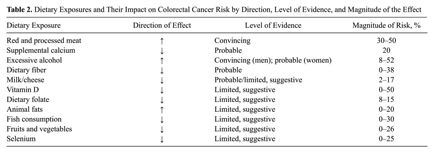
This table from an article by Vargas, et al sums up the impact of specific dietary patterns on colorectal cancer.

a table showing the impact of specific dietary patterns on colorectal cancer

1.  Cancer Res July 1, 2013 73; 4020

2.  Cornett P.A., Dea T.O. (2015). Cancer. In Papadakis M.A., McPhee S.J., Rabow M.W. (Eds), Current Medical Diagnosis & Treatment 2015. Retrieved October 10, 2014

3.  Lancet (2008;371:569-78)

4.  Vargas AJ, Thompson PA. Diet and Nutrient Factors in Colorectal Cancer Risk. Nutrition in Clinical Practice. 2012;27(5):613-623. doi:10.1177/0884533612454885.

5. Chao, A. et al. Meat consumption and risk of colorectal cancer. JAMA 293, 172-182 (2005).

6.  Nutr Clin Pract October 2012 vol. 27 no. 5 613-623

7.   Cancer research 2010; 70(6):2406-2414.

8.  Gastroenterology 2009; 138(6):2029-2043.e10

9.  Gastroenterology 2009; 138(6):2029-2043.e10

10.  Ou, J., DeLany, J. P., Zhang, M., Sharma, S., & O’Keefe, S. J. (2012). Association between low colonic short-chain fatty acids and high bile acids in high colon cancer risk populations. Nutrition and cancer, 64(1), 34-40.

11.  Nutrition and Aging 2014; 2(1):45-67.

12. Am J Clin Nutr 2007;86:1754-64

13.  Aune D et al. BMJ 2011;343:bmj.d6617

14.  Aune D et al. BMJ 2011;343:bmj.d6617

15.  Le Marchand L, White KK, Nomura AMY, et al. Plasma Levels of B Vitamins and Colorectal Cancer Risk: The Multiethnic Cohort Study. Cancer Epidemiol Biomarkers Prev. 2009;18(8):2195-2201. doi:10.1158/1055-9965.EPI-09-0141.

16.  Nature Reviews Cancer 2007; 7:684-700

17.  Gastroenterology 2009; 138(6):2029-2043.e10

18.  Vargas AJ, Thompson PA. Diet and Nutrient Factors in Colorectal Cancer Risk. Nutrition in Clinical Practice. 2012;27(5):613-623. doi:10.1177/0884533612454885.